Non-Invasive Water Leak Detection Services in Plantation, Florida
Water leaks inside residential and commercial structures rarely announce themselves with dramatic geysers. More often, they operate as silent, concealed threats: a microscopic pinhole fissure inside a drywall cavity, a corroded copper pipe fitting weeping beneath kitchen cabinetry, a weeping joint behind a shower valve, or an underground supply pipe releasing water undetected into South Florida's porous sandy soil. Over weeks and months, a hidden leak wasting just one gallon per hour can saturate structural framing, warp hardwood flooring, trigger thousands of dollars in water utility surcharges, and cultivate dangerous black mold colonies inside enclosed living areas.
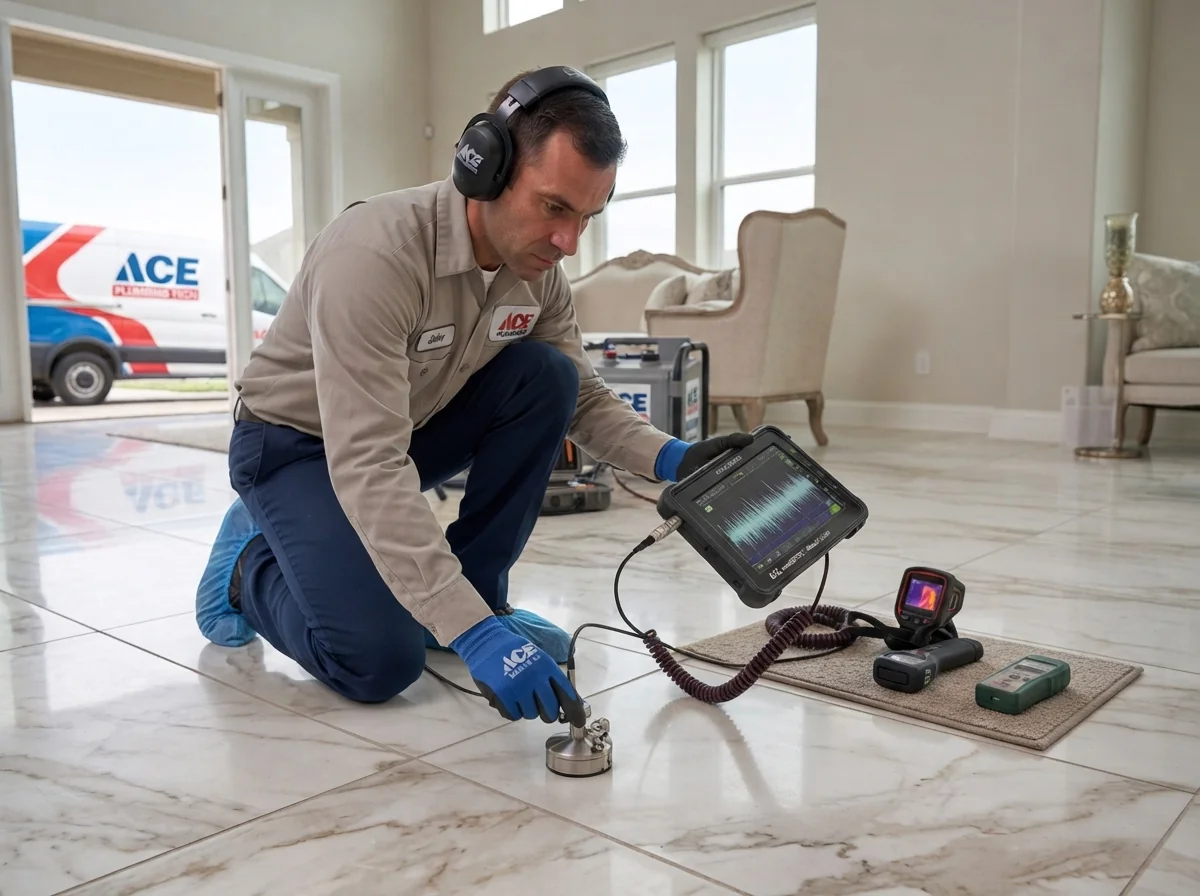
At Plumbing Plantation, our partner technicians eliminate destructive exploratory demolition. Historically, finding a concealed leak meant tearing open large sections of finished drywall, ripping up baseboards, or jackhammering ceramic tile based on visual speculation. Today, our technicians employ scientific non-destructive diagnostic methodologies—including multi-frequency ultrasonic acoustic listening devices, high-resolution infrared thermal imaging cameras, and calibrated hydrostatic pressure decay instruments—to pinpoint the precise subterranean or intra-wall location of water leaks down to the exact inch.
Whether you have noticed an unexplained surge in your monthly City of Plantation water utility bill, observed a damp ceiling stain in Central Park, or hear the persistent faint hiss of running water behind a wall in Jacaranda, our network provides rapid, non-invasive leak isolation. Review our complete plumbing services catalog, explore our coverage throughout neighboring Broward cities, or consult our slab leak detection and repair cost guide to plan your project with confidence.
Early Warning Signs of Hidden Water Leaks in South Florida
Recognizing the subtle warning signs of a hidden plumbing leak enables property owners to intervene before minor drips escalate into major structural disasters. The diagnostic symptom matrix below outlines common indicators and their corresponding inspection methods:
| Observable Symptom on Property | Likely Failure Location | Potential Structural Hazard | Non-Invasive Diagnostic Tool |
|---|---|---|---|
| Water Meter Dial Spinning While Fixtures Off | Main pressurized supply line or fixture branch | Continuous water waste; high monthly utility surcharge | Flow meter isolation and hydrostatic decay testing |
| Damp, Discolored Drywall or Peeling Paint | Vertical water riser or shower valve joint | Framing rot, drywall delamination, black mold growth | Infrared thermal imaging and moisture metering |
| Musty, Earthy Odors in Enclosed Rooms | Slow seep inside partition walls or subfloor | Toxic fungal colonization ($Stachybotrys$ mold) | Electronic moisture mapping and acoustic listening |
| Unexplained Drop in Water Pressure | Major supply line rupture or underground break | Insufficient flow to upper-story fixtures | Calibrated static pressure testing |
| Hissing or Humming Noise Behind Walls | High-velocity pinhole leak in pressurized copper pipe | Progressive erosion of copper pipe wall | Ultrasonic acoustic listening probes |
| Warm Ceramic Floor Tiles in Winter | Hot water distribution line leaking under slab | Soil void creation beneath concrete foundation | Thermal imaging scan and ground acoustic disc |
The Non-Invasive Diagnostic Technology Suite
Accurately locating a pipe breach concealed beneath six inches of reinforced concrete or hidden behind custom wood cabinetry requires specialized scientific instrumentation. Our partner technicians deploy a comprehensive suite of non-invasive detection tools:
4 Core Non-Invasive Leak Detection Technologies:
- Tool 1: Infrared Thermal Imaging: Visualizes minute surface temperature variations across walls
- Tool 2: Ultrasonic Acoustic Sensors: Amplifies high-frequency hiss of escaping pressurized water
- Tool 3: Hydrostatic Pressure Manifolds: Isolates hot, cold, and irrigation circuits with gauges
- Tool 4: Electronic Soil and Drywall Moisture Probes: Maps exact physical saturation boundaries
1. High-Resolution Infrared Thermal Imaging
Water evaporating from a leak site or hot water spreading beneath a concrete floor creates distinct thermal signatures compared to surrounding dry materials. Using high-resolution FLIR infrared thermal cameras, technicians scan walls, ceilings, and floors in real-time. Thermal gradients appear as vivid color contrasts on the digital display—identifying cooling patterns from cold water evaporation or heat plumes from leaking hot water supply lines—allowing us to trace moisture paths back to their originating source.
2. Ultrasonic Multi-Frequency Acoustic Microphones
Pressurized water escaping through a microscopic pinhole or cracked fitting creates distinct high-frequency sound waves as it collides with surrounding pipe walls, drywall, sand, or concrete. Technicians utilize electronic ground microphones and contact probes paired with digital sound processors to listen through solid surfaces. By filtering out ambient environmental noise (such as air conditioning hum or street traffic) and measuring decibel peaks, the exact location of the pipe breach is pinpointed with surgical accuracy.
3. Hydrostatic Pressure Decay Testing
Before cutting into any building surface, technicians verify which plumbing circuit is losing water. By closing the main house shutoff valve and attaching precision liquid-filled test gauges to exterior hose bibbs or interior fixture stops, we pressurize individual piping segments. A steady drop in gauge pressure over a fifteen-minute test window conclusively proves which branch—hot potable, cold potable, or irrigation—is compromised.
4. Deep-Penetration Dielectric Moisture Meters
Moisture meters measure electrical impedance through drywall, plaster, subflooring, and masonry without leaving needle marks or surface damage. Mapping relative moisture percentages across walls allows technicians to establish the exact boundaries of water intrusion and track subterranean migration paths.
The Step-by-Step Homeowner Meter Check
If you suspect an active hidden leak but cannot identify visible moisture, you can perform a simple preliminary diagnostic test using your municipal water meter:
4-Step Homeowner Water Meter Verification Test:
- Step 1: Shut off all water-consuming fixtures inside and outside your home
- Step 2: Ensure automatic ice makers, pool auto-fills, and irrigation systems are disabled
- Step 3: Open the street curb meter box and inspect the low-flow indicator dial (triangle/star)
- Step 4: If the indicator spins or meter numbers advance after 20 minutes, an active leak exists If your water meter advances during this test while all fixtures are off, an active pressurized leak is occurring on your property. Call our dispatch desk immediately at (954) 766-1469 to schedule professional leak isolation.
Common Causes of Hidden Plumbing Leaks in Plantation
Piping systems in Plantation face specific regional conditions that lead to premature mechanical failure:
1. Copper Pipe Pinhole Corrosion and Water Chemistry
During the 1970s and 1980s, rigid copper piping was the standard material for residential water distribution throughout Plantation subdivisions like Jacaranda and Plantation Acres. Over decades, microscopic dissolved impurities and localized velocity turbulence inside narrow pipes create localized pitting corrosion. These pits gradually penetrate through the copper wall, forming microscopic pinholes that spray fine mists of water inside wall cavities or beneath concrete floors.
2. High Municipal Water Pressure Surges
While the Florida Building Code mandates that residential water pressure should not exceed 80 PSI, municipal supply lines in Broward County can experience temporary pressure surges. Over-pressurization places immense strain on pipe joints, flexible appliance hoses, and fixture valves. If your property lacks a functioning pressure reducing valve (PRV), thermal expansion and hydraulic surges can cause pipe joints to fail.
3. Sub-Slab Abrasion and Sandy Soil Settling
Plantation rests above the shallow Biscayne Aquifer, with sandy loam resting atop porous limestone formations. As groundwater levels fluctuate with the seasons, soil shifts beneath slab foundations. Pressurized copper pipes resting against abrasive crushed limestone expand and contract slightly with hot water usage, physically wearing through the pipe wall over time. When these subterranean pipes leak, they are classified as slab leaks, requiring specialized non-invasive detection and overhead PEX reroutes.
Clear Project Estimates and Ethical Service Standards
Leak detection should never involve vague assessments, pressure tactics, or destructive exploratory holes in your home. Our platform enforces strict standards of professionalism and financial clarity:
- Non-Destructive Diagnostic Commitment: We pinpoint the exact source of hidden leaks using acoustic and thermal technology before recommending physical repairs.
- Comprehensive Written Estimates: Following leak isolation, you receive an itemized written estimate outlining the required repair methodology—whether a localized fixture repair, an overhead PEX line reroute, or whole-home repiping.
- Clean-Tech Property Care: Technicians wear sanitized protective boot covers, maintain clean diagnostic zones, and respect your home finishes throughout the testing process.
- Insurance Documentation: We provide property owners with detailed diagnostic reports, photographic thermal images, and itemized repair invoices to support homeowners insurance claims.
For comprehensive budgeting guidance on leak isolation and structural repairs, consult our slab leak detection and repair cost guide or review our plumber cost guide in Plantation, FL.
Frequently Asked Questions About Leak Detection
How long does a typical non-invasive leak detection inspection take?
A standard residential leak detection inspection for a single-family home in Plantation typically takes between one and two hours. Technicians conduct initial pressure decay testing, scan all walls and ceilings with infrared thermal cameras, and deploy acoustic listening equipment across floors to confirm the precise failure point.
Will leak detection require cutting holes in my walls?
No. Non-invasive leak detection utilizes thermal imaging, acoustic listening discs, and pressure gauges to locate pipe breaches through solid drywall, tile, and concrete without cutting. Physical wall access is only created once the exact leak location is verified and you have approved the written repair estimate.
Can a small pinhole leak really cause significant damage?
Yes. A pinhole leak as small as one millimeter can release up to twenty to thirty gallons of water daily inside an enclosed wall cavity. In South Florida's warm environment, this moisture rapidly degrades wooden wall studs, destroys drywall, causes ceramic floor tiles to lift, and triggers toxic mold growth within twenty-four to forty-eight hours.
What should I do if I suspect an active leak right now?
If you observe water pooling or hear rushing water when fixtures are off, shut off your main water valve immediately. Next, call our Plantation dispatch desk at (954) 766-1469 to schedule immediate non-invasive leak detection.
Connect With Our Plantation Leak Detection Specialists
Do not allow an undetected water leak to quietly undermine your home foundation, ruin expensive flooring, and inflate your monthly water utility bills. Connect with experienced, professional leak detection specialists equipped with modern acoustic and thermal diagnostic tools.
Call our Plantation dispatch desk today at (954) 766-1469 to schedule an on-site leak detection inspection, or submit an estimate request online via our contact page. We are committed to safeguarding your property with precision and integrity.