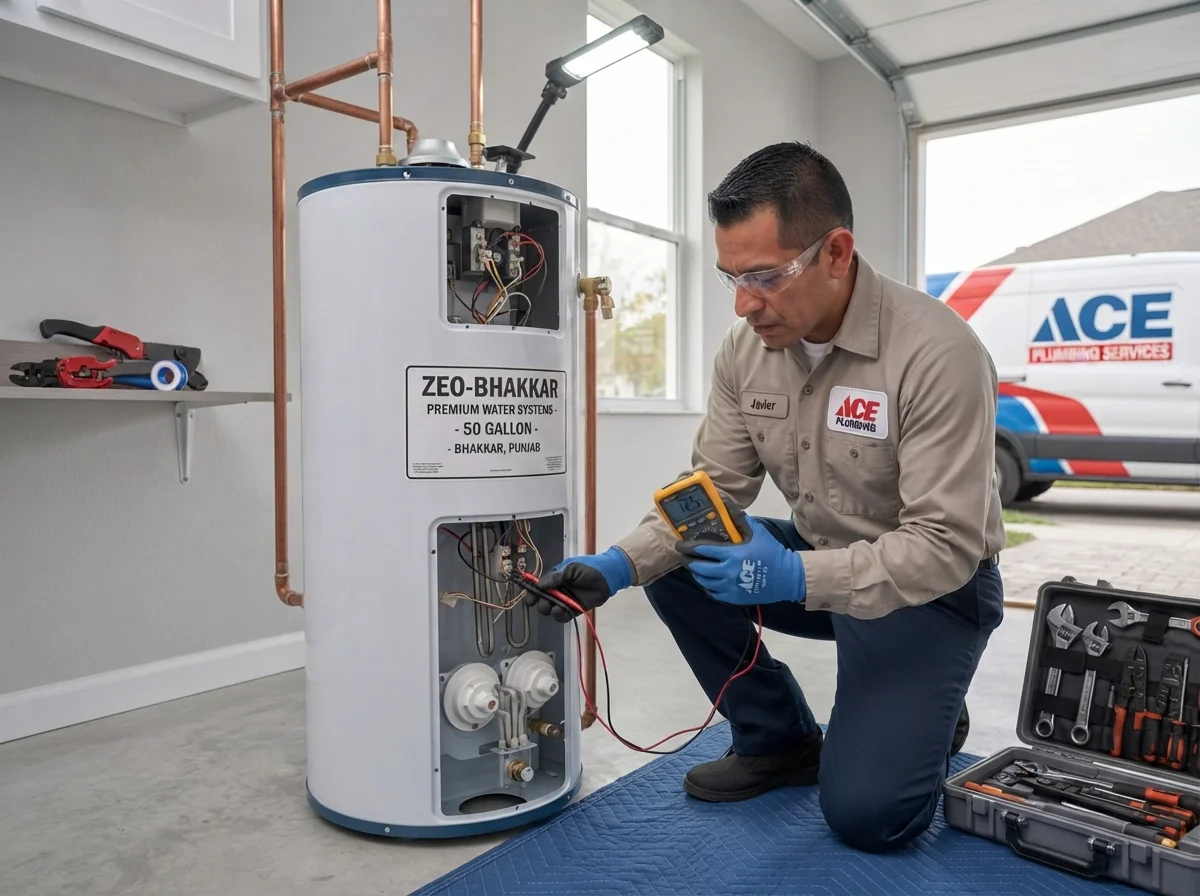
Reliable Water Heater Diagnostic and Repair in Plantation, FL
Few household mechanical failures disrupt daily life more abruptly than a malfunctioning water heater. Stepping into a freezing shower, discovering water pooling around your garage utility closet, or listening to loud popping and rumbling noises from inside your tank demands swift, professional diagnosis. In South Florida's mineral-rich environment, water heating systems face severe operational challenges that cause heating elements to burn out, temperature-and-pressure valves to weep, and internal sediment to choke thermal transfer.
At Plumbing Plantation, our partner technicians provide expert diagnostic troubleshooting and precision component repair for all major water heating brands, including Rheem, Bradford White, A.O. Smith, Rinnai, and Navien. Rather than automatically pushing expensive full replacements when a cost-effective component repair will safely restore system performance, our technicians conduct systematic electrical, thermal, and hydrostatic diagnostic testing to pinpoint the exact failure point.
Whether your home in Jacaranda has lost hot water entirely, your estate residence in Plantation Acres is experiencing rapid hot water depletion, or your condominium in Pine Island Ridge has a dripping thermal expansion tank, our network delivers prompt, code-compliant repairs. Review our complete residential and commercial plumbing services, explore our coverage across neighboring Broward cities, or consult our water heater replacement cost guide to review repair versus replacement benchmarks.
Common Water Heater Symptoms and Component Failure Modes
A water heater rarely fails without giving advance warning signs. Identifying early mechanical symptoms allows property owners to resolve minor component failures before catastrophic tank ruptures occur. The troubleshooting table below details common water heater symptoms and their technical root causes:
| Observable Symptom | Likely Component Failure | Underlying Technical Cause | Recommended Field Repair |
|---|---|---|---|
| No Hot Water (Electric Tank) | Upper or lower heating element burnout | Voltage spike, dry-fire condition, or heavy calcium encrustation | Electrical continuity test; replace element and test thermostats |
| Lukewarm / Insufficient Hot Water | Upper thermostat failure or broken dip tube | Dip tube fracture introduces cold incoming water directly to outlet | Replace cracked PEX dip tube and calibrate dual thermostats |
| Loud Rumbling / Popping Sounds | Heavy calcium carbonate sediment bed | Biscayne Aquifer hard water scale traps boiling water beneath sediment | Comprehensive chemical/power tank flush and element descaling |
| Water Dripping From Relief Valve | Defective T&P relief valve or high water pressure | Municipal pressure surge (>80 PSI) or thermal expansion failure | Test thermal expansion tank; replace 150 PSI / 210°F T&P valve |
| Pilot Light Won't Stay Lit (Gas) | Faulty thermocouple or blocked pilot orifice | Carbon accumulation or thermal millivolt sensor degradation | Clean pilot burner assembly or replace universal thermocouple |
| Rotten Egg (Sulfur) Odor in Hot Water | Corroded magnesium sacrificial anode rod | Anaerobic bacteria reacting with standard magnesium anode rod | Replace with powered titanium or aluminum-zinc alloy anode rod |
The Impact of South Florida Hard Water on Water Heaters
The primary mechanical enemy of water heaters operating across Plantation and Broward County is dissolved mineral content. Municipal water distributed by the City of Plantation Utilities Department is drawn from the Biscayne Aquifer, a porous limestone formation containing elevated concentrations of dissolved calcium carbonate ($CaCO_3$) and magnesium ions.
The Thermal Degradation Cycle of Calcium Sediment in South Florida:
- Phase 1: Dissolved calcium carbonate precipitates out of water when heated above 120°F
- Phase 2: Dense mineral scale settles to bottom of tank, encasing lower heating element
- Phase 3: Sediment acts as an thermal insulator, forcing element to overheat and burn out
- Phase 4: Extreme tank bottom temperatures degrade glass lining, leading to sudden tank rupture
Why Electric Elements Burn Out Prematurely
In standard electric storage water heaters, two screw-in immersion heating elements directly heat forty to eighty gallons of water. When calcium scale blankets the lower element, heat cannot dissipate into the surrounding water. The internal nickel-chromium resistance wire overheats rapidly, burning out the element within a fraction of its intended operational lifespan. Our technicians test element resistance using calibrated digital multimeters, replacing failed elements with heavy-duty low-watt-density Incoloy components engineered to resist mineral scaling.
Critical Safety Components: T&P Valves and Thermal Expansion Tanks
A residential water heater operates under substantial continuous pressure. When water is heated from 50 degrees to 120 degrees Fahrenheit, it naturally expands in volume by roughly two to three percent. In modern closed plumbing systems equipped with backflow preventers, this expanding volume has nowhere to escape, creating dangerous hydraulic pressure spikes.
2 Critical Safety Defense Mechanisms on Modern Water Heaters:
- Defense 1: TemperaturePressure (T&P) Relief Valve: Discharges water at 150 PSI or 210°F
- Defense 2: Pre-Pressurized Thermal Expansion Tank: Absorbs thermal volume expansion safely
The Role of the Temperature and Pressure (T&P) Relief Valve
The T&P relief valve is your water heater's primary defense against catastrophic over-pressurization. Under the Florida Building Code (Plumbing 8th Edition 2023), every water heater must feature an approved ASME-rated T&P valve calibrated to relieve pressure at 150 PSI or 210 degrees Fahrenheit. If your T&P valve is continuously weeping or spraying water into its discharge line, it indicates either an active pressure spike exceeding 150 PSI or internal spring fatigue requiring valve replacement.
Thermal Expansion Tank Calibration
To absorb thermal expansion without continuously opening the T&P valve, modern codes mandate the installation of a pre-pressurized thermal expansion tank on the cold water supply line. Inside this steel vessel, a butyl rubber bladder separates potable water from an air cushion. Over time, the internal air charge can deplete or the bladder can rupture, causing thermal expansion to hammer plumbing fixtures throughout your home. Our technicians test and recharge expansion tank pressure to match municipal supply pressure.
Repair vs. Replacement Decision Matrix
Deciding whether to invest in repairing an existing water heater or modernizing with a brand-new system depends on three primary factors: equipment age, tank structural condition, and repair cost ratio. The evaluation matrix below provides clear guidance:
| Evaluation Factor | Proceed With Component Repair | Strongly Consider System Replacement |
|---|---|---|
| Equipment Age | Under 8 years old | 10 to 12+ years old (nearing end of design life) |
| Tank Shell Condition | Outer jacket dry; leak isolated to valves or fittings | Active water leaking directly from tank bottom or weld seam |
| Repair Cost vs. New System | Repair cost is under 35% of a new replacement unit | Repair cost exceeds 50% of a modern high-efficiency unit |
| Energy Efficiency Rating | Meets standard household budget expectations | High standby energy losses; desire for tankless conversion |
| Frequency of Breakdowns | First mechanical failure experienced | Second or third breakdown within a 24-month period |
If your water heater has an active leak originating directly from the steel tank shell beneath the outer insulation jacket, the internal glass lining has fractured. A leaking tank shell cannot be repaired; attempting to weld or patch a leaking tank will result in structural tank rupture and catastrophic flooding. In these circumstances, our technicians will immediately recommend our water heater replacement service.
Clear Project Estimates and Ethical Service Standards
Plumbing repairs should never involve ambiguous diagnostic fees, pressured upselling, or surprise charges. Our platform strictly adheres to transparent consumer protection standards:
- Scientific ElectricalThermal Testing: Technicians physically test voltage, resistance, gas pressures, and water pressures before making repair recommendations.
- Itemized Written Estimates: You receive a comprehensive written estimate detailing necessary parts (elements, thermostats, relief valves, dip tubes), labor scope, and permit fees before work begins.
- Clean-Tech Property Care: Technicians wear sanitized protective boot covers, position containment tubs beneath drain valves, and ensure utility closets are clean and dry upon completion.
- Florida Code Compliance: All water heater modifications strictly adhere to the Florida Building Code (Plumbing 8th Edition 2023) and City of Plantation Department of Building Safety standards (401 NW 70th Terrace, Plantation, FL 33317).
For complete budgeting comparisons, consult our comprehensive water heater replacement cost guide or review our plumber cost guide in Plantation, FL.
Frequently Asked Questions About Water Heater Repair
Why does my electric water heater run out of hot water much faster than it used to?
In dual-element electric water heaters, the upper element heats the top third of the tank first, then switches power to the lower element to heat the remaining volume. When the lower heating element burns out from calcium sediment encrustation, only the top third of the tank gets heated. This results in warm water that depletes after just five to ten minutes of shower use. Replacing the lower element and descaling the tank bottom completely restores full capacity.
Can a leaking water heater relief valve simply be capped off?
Absolutely not. Capping off a leaking temperature-and-pressure relief valve creates an extreme safety hazard. If thermostats fail and elements continue firing, water will flash into steam, creating catastrophic pressure capable of launching a water heater through your roof. A leaking T&P valve must be properly diagnosed, tested, and replaced along with thermal expansion controls.
How often should a water heater in Plantation be flushed?
Because of the high calcium mineral content in Plantation's municipal water, we recommend performing a complete tank power flush every twelve months. Regular flushing removes loose sediment before it hardens into dense scale, extending heating element life and preventing tank bottom corrosion.
What should I do immediately if my water heater tank is actively flooding my garage or closet?
- Shut off the cold water supply valve located on the pipe entering the top of the heater.
- De-energize the heater by switching off the dedicated double-pole breaker in your electrical service panel.
- Open hot water faucets inside your home to relieve line pressure.
- Call our direct emergency dispatch desk immediately at (954) 766-1469.
Connect With Our Plantation Water Heater Technicians
Do not endure freezing showers or allow a leaking water heater component to damage your floors and drywall. Connect with experienced, professional water heater diagnostic technicians equipped to restore your hot water promptly and safely.
Call our Plantation dispatch desk today at (954) 766-1469 to schedule an on-site diagnostic visit, or submit an estimate request online via our contact page. We are dedicated to providing clear estimates and dependable water heating solutions across Broward County.