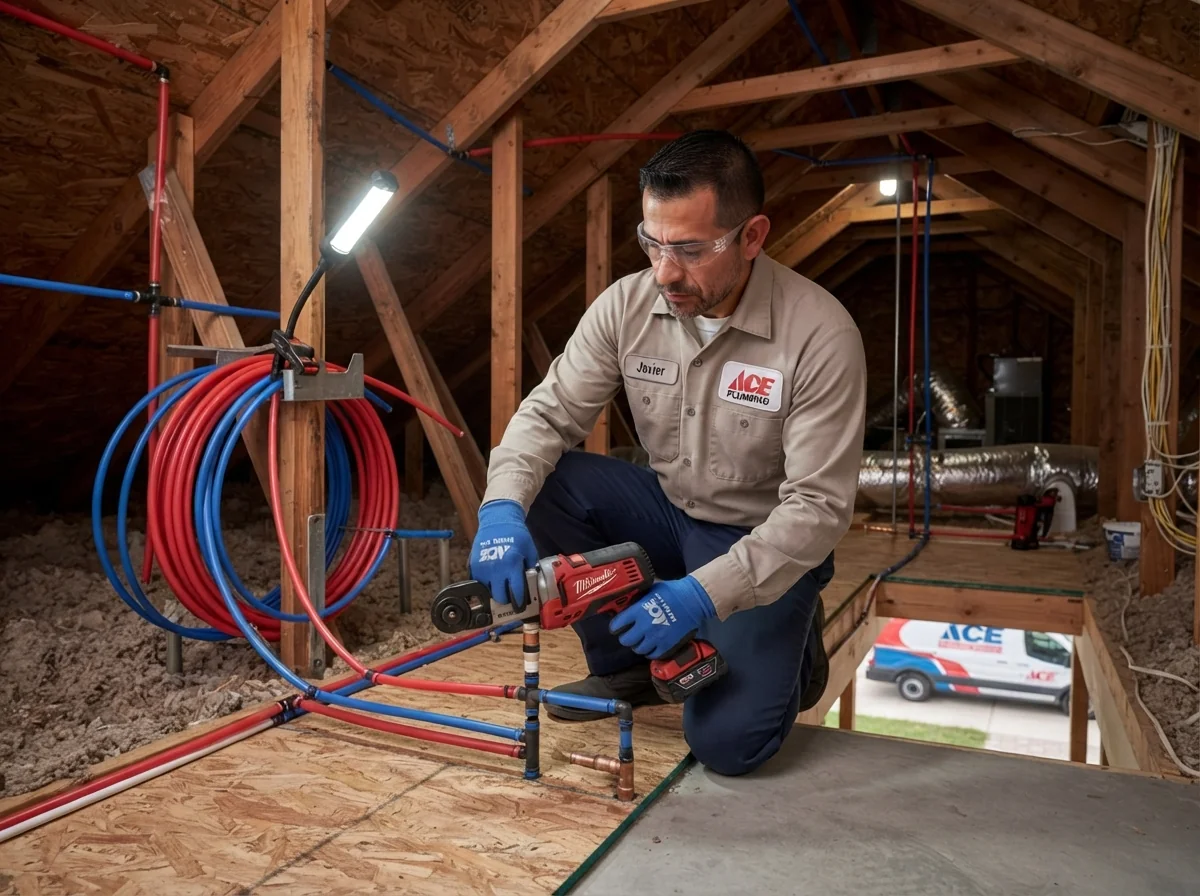
Non-Invasive Slab Leak Repair and Pipe Rerouting in Plantation, FL
Few plumbing failures represent a greater threat to the structural integrity and aesthetic value of a South Florida home than an under-slab water leak. When a pressurized copper water line ruptures beneath a four-inch to six-inch steel-reinforced concrete foundation, thousands of gallons of water can seep silently into supporting subsoil. Over time, this uncontrolled subterranean flow washes away sandy soil, creates structural voids beneath the slab, cracks foundation footings, and forces moisture up through ceramic tile, terrazzo, or engineered hardwood flooring.
At Plumbing Plantation, our partner technicians specialize in modern, foundation-preserving slab leak solutions. While traditional plumbers often reach for heavy pneumatic jackhammers—demolishing expensive Italian porcelain tile, custom marble, or hardwood flooring simply to reach a single pinhole leak—our technicians prioritize non-invasive overhead PEX-A pipe rerouting. By capping off the failed subterranean pipe at both ends and routing a brand-new, flexible cross-linked polyethylene line through attic spaces or interior partition walls, we restore full water pressure while keeping your finished floors completely intact.
Whether you have discovered a localized hot spot on your hallway floor in Jacaranda, noticed uncharacteristic baseboard warping in Plantation Acres, or heard the sound of continuous water flow beneath your slab in Pine Island Ridge, our network delivers rapid diagnosis and lasting repairs. Review our complete catalog of residential and commercial plumbing services, explore our coverage throughout neighboring Broward cities, or consult our slab leak detection and repair cost guide to evaluate budgeting options.
What Causes Slab Leaks in South Florida Properties?
Homes constructed throughout Plantation between 1965 and 1995 were built almost exclusively on monolithic concrete slab foundations. During this construction era, plumbers laid soft copper tubing directly into trench beds before pouring concrete slabs over top. Decades later, three primary mechanical forces drive subterranean copper failure:
3 Primary Mechanisms Behind Plantation Sub-Slab Pipe Failures:
- 1. Mechanical FrictionThermal Expansion: Copper pipe rubs against rough crushed limestone
- 2. Soil ChemistryPinhole Corrosion: Acidic sandy loam causes microscopic pitting in copper
- 3. Kinked LinesVelocity Turbulence: Poor installation bends create high-velocity eddy wear
1. Mechanical Friction and Thermal Expansion
Copper expands and contracts naturally when exposed to temperature changes. When hot water flows through an under-slab line, the copper pipe expands in length by fractions of an inch; when water cools, it contracts. In South Florida, these pipes were frequently laid directly on abrasive crushed limestone gravel or sharp silica sand without protective plastic sleeving. Over twenty to thirty years of daily thermal cycling, the exterior of the pipe rubs continuously against sharp stone edges, wearing away the metal until a pressurized breach erupts.
2. Soil Chemistry and External Electrolytic Pitting
Plantation rests above the shallow Biscayne Aquifer, where groundwater levels fluctuate dramatically between the dry and wet seasons. Saturated sandy soils containing dissolved chemical minerals create an electrolytic environment around buried metallic piping. If a copper line contacts dissimilar metals (such as steel reinforcing rebar inside the concrete slab), galvanic reaction accelerates localized corrosion, carving deep microscopic pits that eventually penetrate the pipe wall.
3. High-Velocity Internal Water Turbulence
When copper pipes were originally installed beneath slabs, contractors frequently bent soft copper coils by hand rather than utilizing manufactured fittings. Sharp, imperfect bends create severe internal fluid turbulence. Over decades of high-velocity municipal water flow, this hydraulic friction scours away the protective inner copper oxide film, causing internal erosion-corrosion that thins the pipe from the inside out.
Observable Symptoms of an Active Slab Leak
Sub-slab leaks often operate undetected for weeks before breaching the surface. Recognizing early physical symptoms allows property owners to take decisive action before widespread foundation settling occurs:
| Symptom on Property | Physical Explanation | Urgency Level | Recommended Corrective Action |
|---|---|---|---|
| Warm or Hot Spot on Floor Tile | Pressurized hot water line discharging directly beneath slab | High | Shut off water heater valve; schedule acoustic leak isolation |
| Sound of Rushing Water With Fixtures Off | High-velocity water escaping underground pipe under 50-70 PSI | Immediate | Shut off main house water valve; request emergency dispatch |
| Unexplained Spike in Monthly Water Bill | Continuous round-the-clock underground water loss (often 200+ gallons/day) | Moderate-High | Perform 20-minute municipal water meter spin test |
| Damp Carpeting or Buckling Hardwood | Hydrostatic moisture pushing upward through concrete pores | High | Deploy infrared thermal imaging and non-invasive moisture meters |
| Cracked Baseboards or Foundation Settling | Subterranean water eroding supportive sand bed beneath slab | Extreme | Structural engineer consultation and immediate pipe reroute |
| Musty Mildew Odor Near Floor Baseboards | Trapped moisture fostering subfloor mold colonies | Moderate | Non-invasive moisture mapping and targeted PEX bypass |
Slab Leak Repair Solutions Compared: Overhead PEX Reroute vs. Direct Slab Jackhammering
When addressing a verified slab leak, property owners typically choose between two repair strategies: jackhammering directly through finished flooring to repair the copper pipe, or executing an overhead PEX-A line reroute. The comparison table below highlights why overhead rerouting is the gold standard for modern South Florida plumbing:
| TechnicalPractical Dimension | Overhead PEX-A Line Reroute | Direct Slab Jackhammering (Spot Repair) |
|---|---|---|
| Preservation of Finished Flooring | 100% Preserved (Zero cutting through floor tile or marble) | Floor destroyed; jackhammering through tile, terrazzo, or wood |
| Risk of Secondary Leaks | Zero (Completely abandons entire failing under-slab pipe) | High (Remaining aging copper pipe remains under slab) |
| Mess, Dust, and Disruption | Clean-tech work confined to attic and small drywall access | Immense concrete dust, noise, and structural living disruption |
| Material Durability | PEX-A resists scale, pitting corrosion, and expansion | Soldered copper coupling vulnerable to future corrosion |
| Installation Timeline | Typically completed in 1 to 2 days | 2 to 4 days for plumbing, plus weeks for floor matching |
| Total Replacement Cost | Predictable; zero expensive flooring restoration costs | High total cost once rare discontinued floor tile matching is factored |
| Florida Building Code Compliance | Fully Approved under FBC Section 605 for potable water | Approved; requires dielectric protection if resting on rebar |
How an Overhead PEX-A Pipe Reroute Works
An overhead reroute completely disconnects the failed subterranean pipe and replaces it with a brand-new, flexible cross-linked polyethylene line routed overhead through attic framing:
4-Stage Overhead PEX-A Pipe Reroute Workflow:
- Stage 1: Non-Invasive Acoustic Isolation: Confirm exact failing circuit (hot vs. cold potable)
- Stage 2: Clean Wall Penetration: Small, discrete access ports opened behind cabinets or closets
- Stage 3: Overhead PEX-A Line Pull: Continuous flexible pipe run through insulated attic rafters
- Stage 4: Sub-Slab Line Abandonment: Failed pipe capped with brass fittings; system re-tested
Stage 1: Non-Invasive Isolation Testing
Using ultrasonic acoustic listening probes and hydrostatic pressure gauges, your technician isolates the exact piping segment that has failed. By testing the hot and cold water distribution loops independently, we determine whether the leak is on a dedicated line serving a single bathroom or the primary water trunk line.
Stage 2: Discrete Wall Access Ports
Technicians identify clean, hidden pathways to drop piping down from the attic space into fixture locations. Whenever possible, small wall access openings are created inside vanities, linen closets, or behind washing machines to minimize visible drywall modifications.
Stage 3: Overhead PEX-A Line Installation
Technicians route continuous, seamless runs of commercial-grade PEX-A tubing through attic joists. Unlike rigid copper, PEX-A requires no fittings or joints inside enclosed ceiling spaces, eliminating potential leak points. The line is thoroughly secured with specialized acoustic suspension clips and encased in thermal insulation to prevent heat loss or condensation.
Stage 4: Sub-Slab Pipe Abandonment and System Commissioning
The compromised subterranean copper pipe is disconnected at both ends and capped permanently with brass mechanical fittings. The new overhead PEX line is tied into the existing fixture supply manifolds, pressurized, and thoroughly flow-tested. The failed pipe remains dormant beneath the concrete slab, permanently eliminating the risk of future water intrusion from that line.
When Is Direct Slab Spot Repair Appropriate?
While overhead rerouting is recommended in over ninety percent of residential slab leak scenarios, there are specific architectural situations where direct slab penetration may be considered:
- Multi-Story Condominium Bottom Floors: In ground-floor condominiums where no accessible attic space or dropped ceiling plenum exists overhead, routing new piping above the ceiling may be structurally impossible without HOA approval and extensive common-area reconstruction.
- Accessible Unfinished Utility Spaces: If the leak is isolated directly beneath an unfinished concrete garage floor or an accessible mechanical closet where finished flooring is absent, a targeted concrete core drill and copper sleeve repair can be executed quickly.
When spot repairs are executed, our partner technicians use specialized concrete dust containment equipment, replace the damaged pipe with heavy-duty Type L copper brazed with high-temp silver solder, and encase the repair in heavy polyethylene protective sleeving to prevent future friction against concrete and rebar.
Clear Project Estimates and Ethical Service Standards
Slab leak repairs represent an urgent, significant investment in your home. Our network strictly adheres to consumer protection and transparent pricing standards:
- Non-Invasive Diagnostic Verification: We accurately pinpoint subterranean breaches using acoustic and thermal technology before proposing corrective options.
- Itemized Written Estimates: You receive a comprehensive written estimate detailing whether your property is best served by an overhead PEX reroute or targeted spot repair, including all material specifications, labor, and municipal permit fees.
- Clean-Tech Property Care: Technicians wear sanitized protective boot covers, roll out heavy floor runners, and deploy HEPA air filtration to maintain a clean living environment.
- Florida Code Compliance: All water distribution modifications strictly adhere to the Florida Building Code (Plumbing 8th Edition 2023) and City of Plantation Department of Building Safety standards (401 NW 70th Terrace, Plantation, FL 33317).
For complete budgeting comparisons, consult our slab leak detection and repair cost guide or review our plumber cost guide in Plantation, FL.
Frequently Asked Questions About Slab Leak Repair
How long does an overhead PEX pipe reroute take to complete?
A standard residential single-line overhead PEX reroute in Plantation is typically completed within one to two business days. Water service is usually restored to the rest of the home at the end of the first day, minimizing disruption to your daily household routine.
Does homeowners insurance cover the cost of slab leak repair in Florida?
In Florida, standard homeowners insurance policies generally cover the costs associated with detecting the leak and repairing secondary water damage (such as drying out drywall, replacing baseboards, and remediating mold). However, the plumbing repair itself (the cost of the overhead PEX reroute or pipe patch) is typically the homeowner's responsibility. We provide itemized invoices, acoustic diagnostic reports, and photographic evidence to support your insurance claim.
Why shouldn't I just keep repairing individual slab leaks as they occur?
If your home was built with copper piping and has experienced its first under-slab leak, the remaining copper lines resting in that same corrosive soil and abrasive sand are the exact same age and subject to the same degradation. Fixing a single spot under the slab often shifts pressure downstream, triggering a second or third slab leak within twelve to twenty-four months. An overhead PEX reroute or whole-home repipe permanently resolves the vulnerability.
Can an active slab leak damage my home's foundation?
Yes. Saturated soils lose their load-bearing capacity. As pressurized water washes away fine sand beneath the concrete slab, large voids develop. Without soil support, the weight of interior walls, tile flooring, and furnishings can cause the concrete slab to crack, drop, and settle, causing severe structural foundation damage.
Connect With Our Plantation Slab Leak Specialists
Do not allow a hidden under-slab water leak to quietly undermine your concrete foundation, ruin valuable flooring, and foster toxic mold colonies. Connect with experienced, professional slab leak specialists equipped with non-invasive diagnostic tools and proven overhead PEX rerouting technology.
Call our Plantation dispatch desk today at (954) 766-1469 to schedule an on-site diagnostic assessment, or submit an estimate inquiry online via our contact page. We are committed to protecting your foundation and restoring dependable plumbing to your home.